Showing posts with label Alaska living. Show all posts

Sunday, June 7, 2015

Summer Bummers

The summer so far in south-central Alaska has been filled with clear skies and hot temperatures, but our cooling winds have brought more harm than good.  There are always pluses and minuses in each area of Alaska when it comes to choosing a place to live or just to visit. There are mountain ranges, elevation, waterways, fault lines, glaciers, mountain passes and road conditions to consider just for starters. Each area of Alaska offers a unique climate, landscape and hazards. 

I consider south-central Alaska to be one of the best places in the state to enjoy spring and early summer weather during the month of May. Before Memorial Day, skies are usually clear and the weather is warm. This year was no exception, hitting 90° and above, making it one of the hottest months in my memory for the area. Other areas of Alaska experienced more of the same with nine towns reporting record temperatures for the month of May. Our northernmost settlement, Barrow, is usually below 30°, but reported temperatures nearing 50°. Good luck to the polar bears. Elsewhere in the Interior, Delta Junction experienced 90° weather in May, then got a shocking, measurable snowstorm which cut power to 360 residents on June 1. Many other towns around the state added May to the books as their top five hottest May on record. To have temperatures hitting 90° this early in the season seems crazy. The village of Eagle reported 91° on May 23 and a week later it was 28°. 

You also have to understand that with a state as large as Alaska, it is unusual to have settlements from Barrow to Annette experiencing record warm weather at the same time. There are so many factors to consider which influence temperatures across the state. South-central Alaska seems to turn green and experience warmer weather quicker than areas farther south in the state. Coastal areas have to consider Ocean currents which may bring colder weather. If you choose an area like Eagle River, you will experience more snowfall in the winter due to the direction of the mountain passage. If you live in Palmer or surrounding areas, dry, windy weather brings respiratory problems. The blowing silt from the glacial bed of the Matanuska River sends extremely high amounts of granite particles into the air, bringing the air-quality way down. Clear blue skies become hazy and white with the granite particles. Residents of the area around the rivers should be wearing some type of respiratory mask, but I never see anyone doing this. I stayed indoors during the worst periods, but I was still experiencing sinus and respiratory problems.
Blowing silt obstructs clear views of Pioneer Peak and surround areas of the Matanuska
River during dry, windy weather.
On the nicer days I retreated to upper elevations, like nearby Hatcher Pass. The subalpine levels still had a little snow and had Spring had just begun. Wildflowers had begun popping up everywhere and I spent my days photographing these tiny bits of color on the mountain slopes. I'm always amazed at the variety of plant life on these sometimes inhospitable mountainsides. I've heard many visitors to the state say how surprised they were at how many flowers we have. They had assumed that with such a cold state, we would have few wildflowers. In actuality, Alaska's mild temperatures and diverse landscapes offer wildflowers the best growing conditions. From a distance, sub-alpine and alpine tundra may look the same, but upon closer inspection you can see thousands of tiny wildflowers of many colors. I spotted about a dozen different wildflowers in one location at the mid-level elevations of Hatcher Pass during the last week of May. All the people below in the Valley may have been wearing shorts and tank tops, the snowy slopes of upper elevations required more clothing.

Upper elevations in Hatcher Pass, June 1st,
Green has only started to appear,


Baneberry blossoms and background Nootka Lupine
 June 1st in the mid-elevations of Hatcher Pass. Plants
are several feet tall.
On May 17, I made a trip up towards the Matanuska Glacier, the green leaves disappearing as I got closer. Once the glacier came into view, most foliage became brown. Just 30 miles away, the seasons were two weeks apart. Areas like this mean you will have one month less of summer a year. That's pretty significant for a state with 3-4 month summers. In the southwest area of the state, Bristol Bay, it was also still cold and brown. Interior areas of the state tend to have larger settlements in valleys, where growing seasons are longer and weather is more stable. Anchorage sits in a kind of sweet spot, with Cook Inlet on one side and the Chugach Range on the other. One main fault of the city is its unstable soil along the inlet, creating a danger of soil liquification during an earthquake. The other huge fault is a lack of space and housing, especially affordable housing. There is no sales tax in Anchorage, and no state tax, leaving the burden to property owners, which makes owning a home in Anchorage a bad investment. At the end of a 30 year mortgage, the home owner will have paid well over the assessed value of the home between the regular mortgage, property taxes and interest. 
A hike along Pinochle Creek trail near the
Matanuska Glacier May 17.
Trees have only just started turning green.

May 12 walk near Palmer. A lot of early green.
For those of us along the glacial rivers and streams, beside the hazards of blowing silt, we also always have the worries of flooding. Warmer temperatures melt the glaciers faster, causing these rivers to swell to dangerous levels. Houses are swept away and roadways shut down. Roads in Alaska are costly and if it's a main highway, like the Glenn, which runs alongside the Matanuska River, it's also a main artery to many Alaska residents. This past year, the Dalton, which is used by the "Ice Road Truckers" to provide necessary supplies to Prudhoe Bay, was shut down due to unusual flooding and thawing and refreezing of the "Sag" River. The delays were very costly and the state had no choice but to declare it a disaster, to receive federal funding for the damages and delays to truckers. In 2014, the Richardson Highway, once again a main artery and the only road into Valdez, was shut down for a long period due to unusually warm weather which caused massive snow melt and avalanches in the Keystone Canyon and the subsequent flooding of the Lowe River. That section of roadway had just been restored from another recent bout with flooding of the same river. 

Even with all of these "inconveniences", I still prefer Alaska to many other states. I may have a slight worry about earthquakes, but you can choose not to live on top of a fault line. There may be flooding, but you can choose not to live in an area which won't wash away. Avalanches happen, but there are precautionary measures to be taken if you and your government are smart enough. The problem is usually our government. Short term solutions and lack of foresight as well as bad spending cause most problems, not the weather. I'm glad I don't have to worry about droughts, tornadoes and major hurricanes. There's just one worry all U.S. citizens share and it's always watching us, telling us how to make our money, spend it and taking half.  It's no wonder people come here to seek a little cabin deep in the wilderness and live off the land. It sounds like paradise to me.

Saturday, January 10, 2015

Fairbanks Fun


In late summer last year, my husband and I decided to spend a week in Fairbanks with my sister. Usually, this week vacation would have been spent in beautiful Valdez, but my dear sibling had moved up to a small cabin deep in the woods outside of the city and there was no way I could resist a week of that. I was not disappointed.

A seat made of rigid foam insulation,
 hanging at the ready in a public
toilet in one of the area parks.
I had previously spent time in North Pole, just outside of Fairbanks. My family enjoyed renting a sod roofed cabin for a week each summer, watching the lazy Chena River slowly flowing by in the back yard. It was almost guaranteed that the week would be gorgeous, with temperatures near 90 degrees. That's a big point for the Fairbanks area, to those wanting sun and warmth in their Alaska vacation. Finding lodging in the area can be expensive, depending on location and luxury, so an RV is a good option for spending more than a day or two. Area campgrounds are peaceful and plentiful and I have also enjoyed tent camping as well as RV camping. Hotels are pricey, but many have blackout curtains to provide a more restful night of sleep in a land where the sun just doesn't quit in the summer. Cabin rentals are available for short or long-term stays. My sister rented her cabin for a couple hundred dollars a month for the spring, summer and fall seasons. This type of accommodation is great for someone who wants to rough it, as they are typically hidden far into the city's surrounding forests and have no plumbing or water. Expect outhouses, in varying states of decay. These types of cabins are usually used by the Forestry Firefighting crews, as these guys tend to be out at fires for long periods of time and are happy to have a base in which to return. 
The steam train runs around the perimeter of Pioneer Park as the
shadows grow longer on a beautiful August evening.
A visit to the Santa Claus House and its reindeer was a must, though my parents never once led us kids to believe in the jolly old fat man. I was that one kid in school who didn't have any problem telling classmates that the man in the red suit who they caught placing presents under the tree was their father. It was still exciting to visit the colorful building, where it's always Christmas. You don't have to believe in Santa to enjoy all the decorations and gifts. Tour buses make frequent stops at this giant gift shop, so it can be crowded at times. There are gifts for everyone in every budget, and no one can resist a souvenir from the Santa Claus House in North Pole. Expect to spend an hour or two exploring the complex. It's a lovely location for a picnic, as there are peaceful spots outside with gorgeous views of the Chena and reindeer.
One of Santa's reindeer in North Pole.
The Santa Claus House in North Pole, with one of its murals taken from old issues of Harper's Magazine.
A peaceful day on the river behind Santa Claus House.
Another spot I always visit is Pioneer Park, inside Fairbanks along Airport Way. This is a 44-acre historical state park with free admission. Various events are held inside, and there is a nightly salmon bake, arts center, small restaurants, museums, mini golf and historical buildings. A walk around is always worth it and I've never resisted touring the free Pioneer museum with its amazing dioramas of typical Fairbanks mining history. Tour the large sternwheeler, Nenana II, take a whimsical ride on the small train around the park perimeter and picnic in the park or along the pond. It's dog-friendly with several dog clean-up bag stations. Not everyone visiting is dog-friendly, however, so it's good to keep your furry friends leashed. 
A Kashim in Pioneer Park, part of the
exhibits and Native Museum in Pioneer Park.
It is an example of a sod home,
once used by the Natives of Alaska.
One of the exquisitely detailed scenes from the
dioramas in the Pioneer Museum of Pioneer Park.

My husband poses next to the beautifully carved
mechanical salmon near the Salmon Bake in Pioneer Park.
A fire scar near Chena Hot Springs. Forestry fire-
fighters from Fairbanks worked quickly to stop this
forest fire from spreading to the Resort and homes.


A panorama of some of the shops and museums in Pioneer Park.

There are a couple of tourist trap type of locations: a tour of a working gold mine with a short train ride and its affiliation, a large riverboat which travels to a native village. The gold mine tour ends with the ability to pan for your own gold in a sluice. Everyone finds about $10 in gold. A lot of people have enjoyed both activities, though I opted to pan the old-fashioned way. We traveled up to the Fox area, where we found Pedro Creek. The creek was panned by Felix Pedro, an Italian who put Fairbanks on the map when he discovered the creek's hidden riches of gold. We chose to follow in his footsteps and spend a day enjoying the cool water and warm weather while painstakingly swirling mounds of dirt in our pans. We didn't strike it rich, but we had a lot of fun.

A close-up of a mechanical salmon, something I can imagine must be quite a
source of amusement after the guests at the evening Salmon Bake have enjoyed a few libations.
A tribute to Felix Pedro. There is more information about his life at the Pioneer Museum at Pioneer Park. 
My sister plays with her husky in Pedro Creek, her gold pan
temporarily resting while the dog frolics in the cool stream.

I had never visited Chena Hot Springs, so my sister decided it would be a fun trip to take in the evening. It's about 60 miles north of Fairbanks and we chose to go in the evening for better chances at  spotting wildlife. We spotted a couple moose and a fox on the ride back. There are plenty of areas to explore along the way, including great hiking trails and fishing opportunities. I did not partake in the hot springs experience, but I enjoyed touring the grounds. The gardens are beautiful and there are numerous pieces of antique mining equipment incorporated into the designs. The reviews of the restaurant are fantastic and they grown their own produce in greenhouses heated geo-thermally. There  is an indoor heated pool for the family, indoor hot tubs and an outdoor hot springs rock pool for those 18 and over. The resort also has shuttle service for those flying into Fairbanks. A trip to the hot springs during Fairbanks' bitter winter is something I can only imagine to be heavenly, with the aurora dancing vividly above the rock pool. 

A metal dragon sculpture seemingly breathes fire as the late evening clouds cross the northern sky.
 It is around 11 pm in August at Chena Hot Springs.
A dog lounges comfortably upon a table outside an Artist Studio in Pioneer Park

A hot springs filtration pond at Chena Resort.

The Fairbanks area has enough activities to keep someone busy and my husband and I were active from early morning to evening, thoroughly enjoying our stay. Though much of our enjoyment came from just relaxing with my sister at her little cabin in the woods, the area provided us with a lot of fun and sunshine and I plan on exploring the surrounding areas further. In fact, we began considering a move to the area, as long as we can stay in the woods outside of the city with my sister. Anyone else who may be interested in a move to this northern metropolis should consider how many residences are without plumbing. There are water stations around town where many residents fill up large tanks to transport home and fill up their own holding tanks. Gym memberships can provide a way to shower each day in the city, or one can brave the laundromat showers. Air quality in the winter is bad, due to the cold weather holding pollution from heating vehicles and wood stoves. Summer doesn't always mean good air quality either, as the thick spruce forests surrounding the city are like tinder boxes. Amazingly long days of bright sunshine also mean frequent lightning strikes and forest fires. Not everyone can brave this climate and its rough and tumble citizens. The Fairbanks residents still seem to live in the rugged past, sometimes making it feel like you've stepped into the old Pioneer days. 
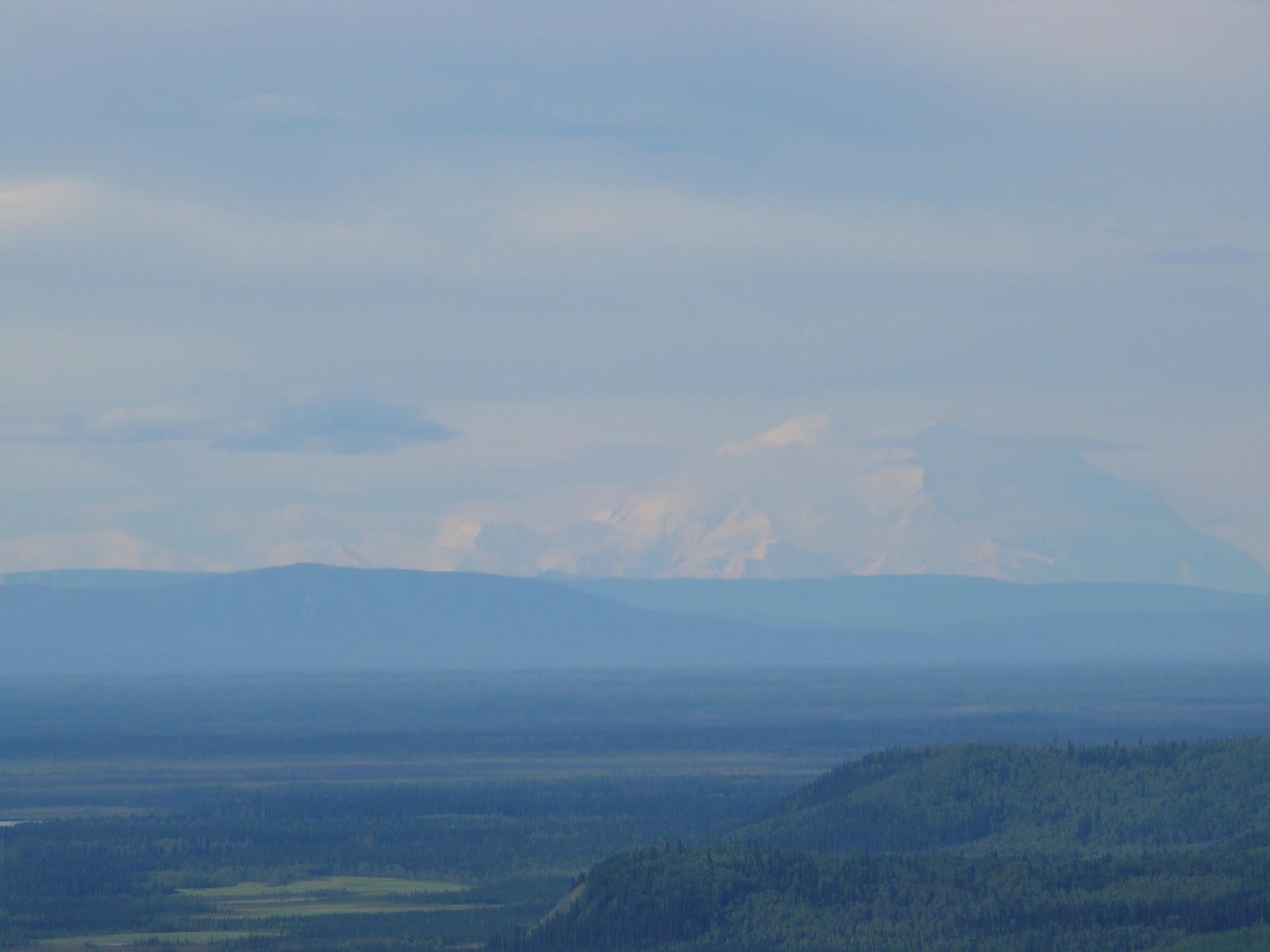
A view of Denali from the outskirts of Fairbanks.


Friday, August 1, 2014

Hunting...

Growing up in Alaska with a Father who hunted, meant that I grew up hunting. As the oldest daughter, my Dad was always teaching me how to shoot, fish and hunt. I enjoyed myself, though it wasn't exactly a walk in the park. Hunting and fishing in Alaska can be quite difficult. It can be strenuous, back-breaking, nerve-wracking, dangerous and wet! Then there are the regulations to follow. Alaska's hunting and fishing regulations are very strict and extensive. The troopers who have to patrol this enormous state to catch hunting and fishing law-breakers have a lot of ground to cover. Needless to say, some people get away with breaking the laws of the land. Those who don't, get their equipment, vehicles, boats, ATV's and their game confiscated. Whatever they were using to commit the illegal act is taken, and they are heavily fined. I'm talking about this subject because I feel a lot of non-Alaskans misunderstand Alaska hunters and hunting regulations.

Let's start with food sources available in Alaska. Some of us have a grocery store. Some of us don't. The prices of food in Alaska are pretty high in comparison with other states. In many rural villages across the state it's not possible for the residents to get what they need whenever they need it. The prices are extremely high for them, and they don't usually have much of an income, if any. Some of the prices that may be seen in a rural village grocery store are $14/ half gal. juice, $9/ half gal. milk, $14 for a small container of fruit,  $8/box cereal, $7 loaf of bread and fresh water is very high as well. Then there's the cost of living. It can be hard to get somewhere up here. We don't have mass transit except for some buses in Anchorage. Gas in rural communities can be upwards of $10/gal and the same for heating fuel. There are many villages which don't have access to clean water for drinking and with high prices for anything healthy, their alternative is cheaper juices and sodas which are sugar-filled. This leads to dental and other health problems. The price of medical care in Alaska is higher, too. So when a fishery or land management area is closed to hunting and fishing for people in the area, it's denying them access to the only food source they can get.
Killing it in Valdez. Yeah, I'm an awesome angler, I don't mind saying. I was taught by the best.
 The next people who hunt are those like my family. We have access to grocery stores, but prices are fairly high. Having meat in the freezer for the winter was important. We ate a lot of fish, moose and caribou which we worked hard to acquire. I can say with all confidence that our meat was a lot better than the corn-fed, antibiotic filled meat you find at the store. My father grew up poor, and to save his mother from having one more mouth to feed, he would disappear for days at a time. He would live off the land for a few days and then come home, receiving a scolding from his mother for disappearing so long. He was only about 10 when he started doing this. Naturally, he wanted to show his daughter how to do the same. I grew up feeling like I could withstand any disaster that came, because I can wander off into the woods and live just fine. We didn't hunt for sport. 

It's easy to tell who is hunting for sport and who is hunting for necessity. Anyone spending thousands of dollars on gear and guides and planes is out for the trophy. I hear people talk badly of Alaskans for hunting this way, but in reality, it's people from out of state flying up here for the thrill of the hunt. Lucky for them, we have a lot of wildlife and not a lot of Alaskans to hunt them. I read the state trooper dispatches during hunting and fishing seasons and I see a lot of people from out of state getting the fines. Commercial fishermen and game guides come up here to partake in Alaska's bountiful harvests, and then take their money out of state to spend it. Personally, I think if you're going to benefit commercially from Alaska's wildlife harvests, you should have to live here. Plenty of the guides from out of state don't obey our laws, either. At least when these law-breakers are caught, their harvests are confiscated and donated to charity.

One major thing that has always bothered me was the people from out of state that don't know enough about Alaska's wildlife regulations to pass judgement, yet doing so anyway. I've been attacked verbally by narrow-minded individuals that have no concept of subsistence or survival in Alaska. In fact, I've felt offended many, many times by ignorant comments about Alaska and Alaskans. There are organizations that have an agenda and spread slander or propaganda defaming Alaskans and the Alaskan way of life. Most true Alaskans are wary of "outsiders" and feel on edge when engaging in conversation. We're just waiting for the topic of hunting, gun control or Alaska government to come up and we have to play defense constantly.

A successful caribou hunt for me. A good hunter dresses the animal in the field and bags it in game bags to keep flies off. Preserving the meat is of the utmost importance.
Since I was a young teen, I've had to defend myself from people operating on emotion. I engaged in debates during school, always taking the side of the hunter, since these are the topics for Alaskan schoolchildren. When arriving for the first day of school, kids swapped hunting stories. I was left out, because I was a girl. The boys and even teachers looked at me like I was speaking a different language, just because I could say what type of gun I used and the game district where I hunted. For me, it was even more difficult to feel accepted. Then when I moved to Maryland for a short period of time, I nearly had a nervous breakdown. The negativity of people towards Alaska and its people was overwhelming. The culture shock was hard enough, but to have people blasting your way of life and the land you love without knowing any of the facts was unbearable.

We are not a bunch of cruel animal killers. We do not let people get away with shooting whatever they want. We care about our wildlife and have strict hunting and fishing regulations. You have to apply for a caribou permit for specific herds, and hope you get one. If you want to get a cow moose, you have to apply for that and be lucky as well. You can get a hunting permit for bear or bull moose, but the regulations for jurisdiction, size, age and antler specifications makes it a very difficult hunt. That's why trophy hunters hire guides to tell them when to pull the trigger.

I don't hunt anymore, and I fish for salmon when I can. Hunting was an experience I won't ever forget. It was scary, adrenaline-pumping and exhausting. I stopped when I began having dreams of moose pulling a gun on me. We don't all enjoy killing an animal, I know I had issues with it. However, if I end up living in the bush and taking up a subsistence lifestyle, I would do it again when necessary. I could survive and provide for myself in the wilderness. How many women can say that?


Thursday, June 26, 2014

The End of Hibernation

So I did what a lot of Alaskans do each winter, which is hibernate.  There are plenty of us who live in areas where we hole ourselves in for a long, tough winter and make our appearance with the bears in the spring.  Unfortunately for me, the bears were out of hibernation more last winter than myself.  There were multiple reports over the winter months about bears being seen out and about, looking for food. From Juneau to Denali, grizzlies and black bears were skulking around, possibly rumbling tummies called them out of their holes. It's not too uncommon, but this last winter was certainly an unusual one for Alaskan standards. 

Unseasonably warm weather lead to green grass making a surprise appearance around my home in January. Very little snow in most areas and rain in Fairbanks later in the season than ever recorded before. Massive avalanches closed the only roadway into the town of Valdez during one warm night of wet snow and rainfall. The avalanche blocked a narrow section of a canyon just outside of the town known for being the last stop of the Alyeska Pipeline and site of the Exxon Valdez oil spill. A river which normally has a very low flow during winter was flowing much higher than normal due to warmer temps and a very large lake formed across the highway and filled the canyon, threatening to burst through and flood the town. 

Across the state people noticed big temperature fluctuations and a lot less snow.  A winter in Alaska without snow is depressing enough for me, but I had also missed out on last summer, as I was rebuilding an old camper the whole season. I suffer from depression anyway, and the lack of activity, cabin fever and a vitamin D deficiency caused me to begin having panic attacks this spring, worse than ever before. I went most of the entire winter without the internet, which is why my blog went silent for a while. I wasn't even aware the olympics had taken place. No news or radio and the only contact with the outside world I had were a couple shopping trips for necessities every few months. I've had to deal with some health issues and have been dragging myself to doctor's appointments and also putting some off. I'm trying to combat my depression and cabin fever by finally going on a couple overnight camping trips in our newly remodeled camper, which is enjoyable for me as I love the outdoors of Alaska. 

A fossil hunting trip to Eureka turned up only a lost gold pan (which my husband had just been saying he forgot to bring) and ten unbroken clay pigeons a poor marksman left behind.  The area where I like to hunt for fossils is on the Glenn Highway, south of Glennallen in a small hunting community called Eureka. Strange snow runoff and rainfall decimated some of the fossil-rich rocks in area and mud slides covered the rocks with a thick layer of dirt. Despite the lack of fossils, it was a good hike and of course, my husband and I set up our frisbee golf cage and played a few rounds at our campsite. This has become a tradition with us and we always like to take a picture of the cage sitting in such a picturesque place with gorgeous mountains in the background. 

The Glenn Highway does have some problems with frost heaves, which are marked by simple "temporary" signs which say "BUMPS." I believe a very serious recent accident occurred due to these frost heaves, which seemed obvious when I saw skid marks directly after a less noticeable dip in the road. The driver must have slammed on the breaks and steered away from the front end of a guardrail, causing himself and his passenger to fly off the road. The skid marks made me look up recent accidents in the area when I got back home and saw that 2 young men were involved in the crash and were very blessed to have a doctor and forestry crew drive by the scene in the middle of the night. There is very little traffic in this area at night and their lives were saved by the firefighters putting out their car fire and a medic and passing army doctor giving emergency treatment until more help arrived. 

Further down the road is another dangerous area marked by signs saying "Rock slide next 25 miles". I was behind a liquid nitrogen truck through this area and it was a slightly stressing ride. Alaska roads were typically built by people who were shown the best routes by the natives of the area, and they follow the rivers which were previously the only mode of transportation through the state. A lot of areas are flanked by large cliff walls, carved by the retreating glaciers which feed these rivers. Though the state tries to make improvements when possible, the frost heave areas on the Glenn have not been fixed in years. Road maintenance in the state is very costly and widening areas or straightening dangerous curves can mean cutting straight through mountains. Personally, I think we could benefit from making Alaska's highways toll roads. Frost heaves alone can cause a section of road to be ripped up and rebuilt every year. Commercial truck traffic creates dips and grooves and studded tires wear out the pavement when there's no snow. Graters and plows can scrape up roads and potholes are common. We have some very costly maintenance and a very low population to contribute taxes to the DOT. With the avalanches outside of Valdez, costs were considerable for the snow removal and road closure. Extreme weather contributes greatly to road maintenance and accidents on our mostly narrow 2-lane highways. 

It's not the most biker-friendly state, either. Scenic highways could be enjoyed by bikers and hikers if we actually had bike paths in more areas. It would be nice to have rest stops that aren't just outhouses filled with graffiti, flies and even a wandering bear or two if they have no door. Alaska doesn't have a lot of infrastructure because it is so costly. There are solid rock mountains, glaciers and rapid rivers to negotiate, not to mention animal migration corridors and salmon spawning streams. What roads we do have are constantly being threatened by flooding or course-changing rivers, rock slides and avalanches. It's not easy to travel in this state, but the destination is usually worth it. The state is beautiful and it would be nice to get to where we're going safely and stress-free. There's a lot of work to be done, but it will take time and money. Toll roads could be the answer if Alaskans would approve. 

In the meantime, I will continue trying to relax with my husband on camping trips around the state this summer. One of the areas of the Glenn Highway has sections of old roadway, now straightened and widened. The old, unused roadway made for a nice bike ride for myself and my husband, though I obviously need to start making up for the sedentary lifestyle I had during my hibernation because the ride back uphill was a killer. Another section of the old highway has been taken over by beavers, who have dammed up a tiny creek and flooded the area out, creating for themselves a gigantic, multi-tiered beaver paradise. If we actually managed to begin moving the highways away from waterways, migratory animals could begin traveling the routes and contributing to new growth along the riverbanks. It could very likely solve the erosion issues by having migrating animals naturally trimming and propagating plants as they travel along the river's edge.

For all its faults, the Alaska road system is full of beauty and breathtaking scenery. So far, nothing has kept me from exploring the state on any of these roads, no matter how bad they may be.

Thursday, September 30, 2010

Winter is Coming


I can't say I'm too excited about winter coming. Mainly because I haven't sold my house yet and I feel like I was cheated out of my summer a little. We had some records this summer as far as rainfall was concerned. A month straight of rain every day. This is a big deal when we're talking about a summer that only lasts a few months. We even had a snowfall in early spring that allowed me to make a pretty awesome pirate snowman, but still meant taking away precious summer activities. The darkness is a definite downer, as the sun rises around 10a.m. or later and sets around 3 to 4 p.m. Most 9-5 workers never see daylight in the winter except on days off. Depression becomes an issue, but I'm one of those people who tries to stay positive. I love the state and try to embrace every season with an optimistic outlook. When it rained for a month I said, "Well, it's filling our well with fresh water. We know it won't be going dry and we don't have to water any plants or grass!" When it snowed in late April after I started seeing fresh grass and flowers shooting up, I made a snowman. When nights become days, I stargaze and watch the northern lights. When we get a foot of new powder on the ground I rejoice in the crisp, white surroundings, snapping photos of mountains that look like comfy down pillows. I opt to shovel my driveway for exercise. Hatcher Pass is gorgeous no matter what the season may be, but winter is indescribable. I love living 15 minutes from this recreation destination and try to visit often. There are a lot of ski trails around and my husband and I are looking forward to doing some cross-country skiing and snow-shoeing. I hope my next property is close to snow-machine trails, as it is an exhilarating way to take away winter blues. There is nothing like spending the crisp daylight riding around the wilderness and coming back to a cozy cabin, stripping off the snowsuits and warming up in front of a roaring fire. Of course, there's one major aspect to colder weather that is often overlooked by all those people griping about watching snow flurries in September. As a person who enjoys and appreciates all this beautiful nature, I always think of the increasingly melting glaciers. They are rapidly disappearing and I couldn't imagine an Alaska without them.
The fact is, Alaska isn't for everyone. We have a lot of Texas, Maryland and California transplants here and I have no idea why. Maybe they were sick of the heat. My husband came from Maryland to escape the cities and crowds. Some people have ideas of grandeur, thinking they'll get free money from the dividend, higher pay rates and a picturesque log home. What they get is a 2 year waiting period for the dividend, higher cost of living, and an apartment in the city because they realize that's all that's available.
Transplants get stuck in the city when they realize everything is so far away. I've known people who lived here for 15 years and never traveled farther than 40 miles outside of Anchorage. These "Debbie downers" really irritate me. I don't know why they even live in the state. They typically do nothing but complain and when I suggest a vacation, they say it's too expensive to go out of state. At this point, I am envisioning myself punching them in the jugular and confiscating their dividends. I can only say to choose your state wisely. Alaska is not a state, but a state of mind, as so many people before me have said. This makes me believe there are true Alaskans out there, I just have trouble finding them.
As for me, the sun has finally made an appearance through the snow clouds hovering threateningly, so I'm going to make the most of it and rake some leaves. Maybe there's another Alaskan out there doing the same.