Saturday, January 10, 2015

Fairbanks Fun


In late summer last year, my husband and I decided to spend a week in Fairbanks with my sister. Usually, this week vacation would have been spent in beautiful Valdez, but my dear sibling had moved up to a small cabin deep in the woods outside of the city and there was no way I could resist a week of that. I was not disappointed.

A seat made of rigid foam insulation,
 hanging at the ready in a public
toilet in one of the area parks.
I had previously spent time in North Pole, just outside of Fairbanks. My family enjoyed renting a sod roofed cabin for a week each summer, watching the lazy Chena River slowly flowing by in the back yard. It was almost guaranteed that the week would be gorgeous, with temperatures near 90 degrees. That's a big point for the Fairbanks area, to those wanting sun and warmth in their Alaska vacation. Finding lodging in the area can be expensive, depending on location and luxury, so an RV is a good option for spending more than a day or two. Area campgrounds are peaceful and plentiful and I have also enjoyed tent camping as well as RV camping. Hotels are pricey, but many have blackout curtains to provide a more restful night of sleep in a land where the sun just doesn't quit in the summer. Cabin rentals are available for short or long-term stays. My sister rented her cabin for a couple hundred dollars a month for the spring, summer and fall seasons. This type of accommodation is great for someone who wants to rough it, as they are typically hidden far into the city's surrounding forests and have no plumbing or water. Expect outhouses, in varying states of decay. These types of cabins are usually used by the Forestry Firefighting crews, as these guys tend to be out at fires for long periods of time and are happy to have a base in which to return. 
The steam train runs around the perimeter of Pioneer Park as the
shadows grow longer on a beautiful August evening.
A visit to the Santa Claus House and its reindeer was a must, though my parents never once led us kids to believe in the jolly old fat man. I was that one kid in school who didn't have any problem telling classmates that the man in the red suit who they caught placing presents under the tree was their father. It was still exciting to visit the colorful building, where it's always Christmas. You don't have to believe in Santa to enjoy all the decorations and gifts. Tour buses make frequent stops at this giant gift shop, so it can be crowded at times. There are gifts for everyone in every budget, and no one can resist a souvenir from the Santa Claus House in North Pole. Expect to spend an hour or two exploring the complex. It's a lovely location for a picnic, as there are peaceful spots outside with gorgeous views of the Chena and reindeer.
One of Santa's reindeer in North Pole.
The Santa Claus House in North Pole, with one of its murals taken from old issues of Harper's Magazine.
A peaceful day on the river behind Santa Claus House.
Another spot I always visit is Pioneer Park, inside Fairbanks along Airport Way. This is a 44-acre historical state park with free admission. Various events are held inside, and there is a nightly salmon bake, arts center, small restaurants, museums, mini golf and historical buildings. A walk around is always worth it and I've never resisted touring the free Pioneer museum with its amazing dioramas of typical Fairbanks mining history. Tour the large sternwheeler, Nenana II, take a whimsical ride on the small train around the park perimeter and picnic in the park or along the pond. It's dog-friendly with several dog clean-up bag stations. Not everyone visiting is dog-friendly, however, so it's good to keep your furry friends leashed. 
A Kashim in Pioneer Park, part of the
exhibits and Native Museum in Pioneer Park.
It is an example of a sod home,
once used by the Natives of Alaska.
One of the exquisitely detailed scenes from the
dioramas in the Pioneer Museum of Pioneer Park.

My husband poses next to the beautifully carved
mechanical salmon near the Salmon Bake in Pioneer Park.
A fire scar near Chena Hot Springs. Forestry fire-
fighters from Fairbanks worked quickly to stop this
forest fire from spreading to the Resort and homes.


A panorama of some of the shops and museums in Pioneer Park.

There are a couple of tourist trap type of locations: a tour of a working gold mine with a short train ride and its affiliation, a large riverboat which travels to a native village. The gold mine tour ends with the ability to pan for your own gold in a sluice. Everyone finds about $10 in gold. A lot of people have enjoyed both activities, though I opted to pan the old-fashioned way. We traveled up to the Fox area, where we found Pedro Creek. The creek was panned by Felix Pedro, an Italian who put Fairbanks on the map when he discovered the creek's hidden riches of gold. We chose to follow in his footsteps and spend a day enjoying the cool water and warm weather while painstakingly swirling mounds of dirt in our pans. We didn't strike it rich, but we had a lot of fun.

A close-up of a mechanical salmon, something I can imagine must be quite a
source of amusement after the guests at the evening Salmon Bake have enjoyed a few libations.
A tribute to Felix Pedro. There is more information about his life at the Pioneer Museum at Pioneer Park. 
My sister plays with her husky in Pedro Creek, her gold pan
temporarily resting while the dog frolics in the cool stream.

I had never visited Chena Hot Springs, so my sister decided it would be a fun trip to take in the evening. It's about 60 miles north of Fairbanks and we chose to go in the evening for better chances at  spotting wildlife. We spotted a couple moose and a fox on the ride back. There are plenty of areas to explore along the way, including great hiking trails and fishing opportunities. I did not partake in the hot springs experience, but I enjoyed touring the grounds. The gardens are beautiful and there are numerous pieces of antique mining equipment incorporated into the designs. The reviews of the restaurant are fantastic and they grown their own produce in greenhouses heated geo-thermally. There  is an indoor heated pool for the family, indoor hot tubs and an outdoor hot springs rock pool for those 18 and over. The resort also has shuttle service for those flying into Fairbanks. A trip to the hot springs during Fairbanks' bitter winter is something I can only imagine to be heavenly, with the aurora dancing vividly above the rock pool. 

A metal dragon sculpture seemingly breathes fire as the late evening clouds cross the northern sky.
 It is around 11 pm in August at Chena Hot Springs.
A dog lounges comfortably upon a table outside an Artist Studio in Pioneer Park

A hot springs filtration pond at Chena Resort.

The Fairbanks area has enough activities to keep someone busy and my husband and I were active from early morning to evening, thoroughly enjoying our stay. Though much of our enjoyment came from just relaxing with my sister at her little cabin in the woods, the area provided us with a lot of fun and sunshine and I plan on exploring the surrounding areas further. In fact, we began considering a move to the area, as long as we can stay in the woods outside of the city with my sister. Anyone else who may be interested in a move to this northern metropolis should consider how many residences are without plumbing. There are water stations around town where many residents fill up large tanks to transport home and fill up their own holding tanks. Gym memberships can provide a way to shower each day in the city, or one can brave the laundromat showers. Air quality in the winter is bad, due to the cold weather holding pollution from heating vehicles and wood stoves. Summer doesn't always mean good air quality either, as the thick spruce forests surrounding the city are like tinder boxes. Amazingly long days of bright sunshine also mean frequent lightning strikes and forest fires. Not everyone can brave this climate and its rough and tumble citizens. The Fairbanks residents still seem to live in the rugged past, sometimes making it feel like you've stepped into the old Pioneer days. 
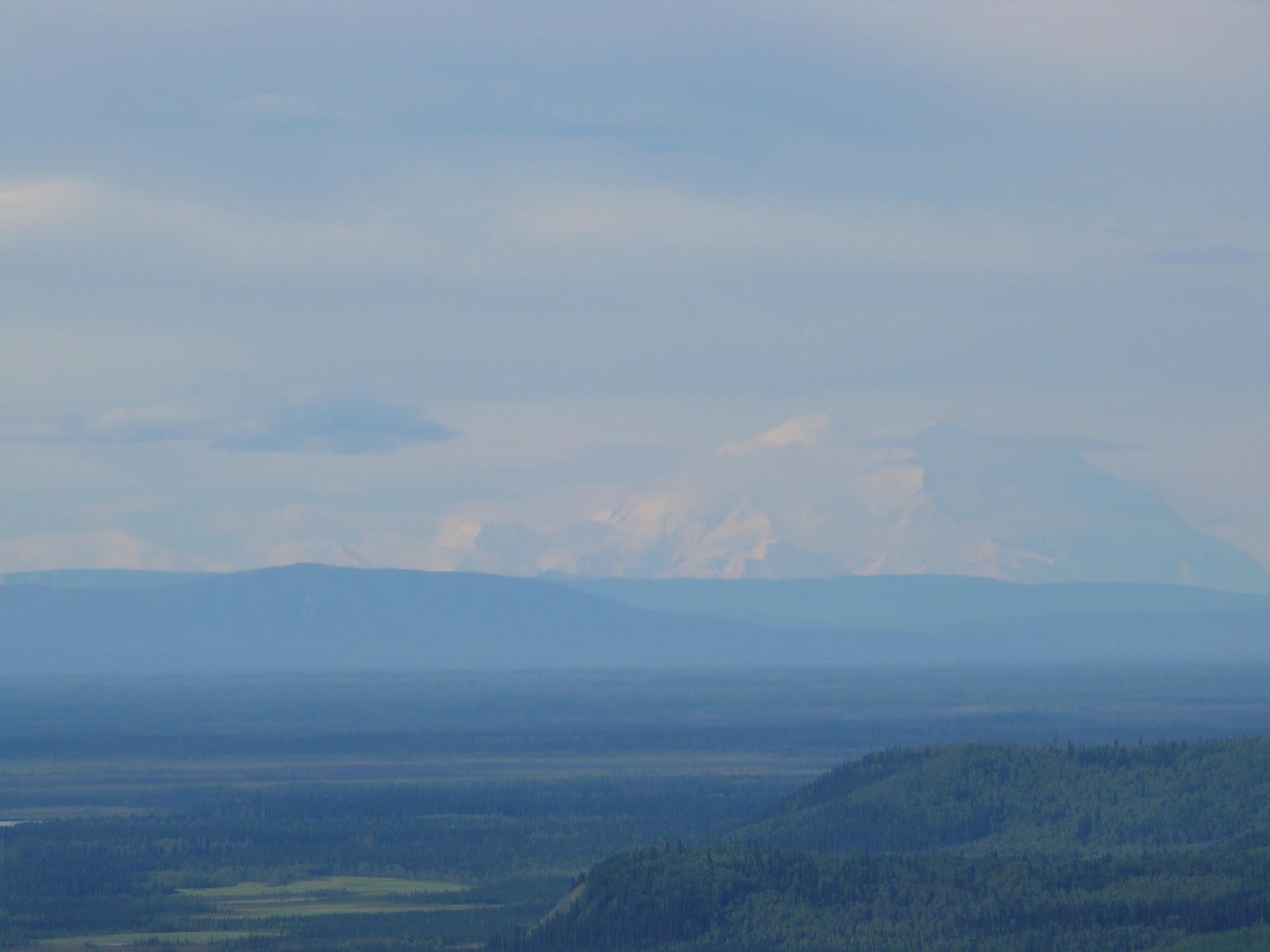
A view of Denali from the outskirts of Fairbanks.


Friday, January 9, 2015

Ohhhh, Anchorage...

Alaska has its share of problems. One of our biggest has always been infrastructure. There's a lot of ground to cover in this state, and the terrain is no walk in the park to survey, let alone build upon. Anchorage was built as a tent city in 1915 upon orders by President Woodrow Wilson to construct a railroad upon Athabaskan land. Because the city was built by the Army, it was laid out in a very methodical way, but as it grew, a lot of thought was omitted in some areas. Now that lack of thought is biting Anchorage in the butt. 

Besides Anchorage having been built partially upon earth which liquifies and slides into the inlet during large earthquakes, it lacks transportation options in and out of the city with no way to bypass Alaska's largest population. The city should have been built upwards instead of outwards, and the army bases shouldn't have been built in such a way to prevent city expansion, which has skyrocketed property taxes in and around city limits. 

Besides financial and transportation problems with this city, it also has wildlife problems abounding everywhere. This tends to happen when you put a city right between an inlet teeming with marine life and mountains full of of moose and bears. The bears want to get out of the mountains and get to the incoming salmon. Moose come down from the mountains to graze upon low elevation trees, shrubs and open water. Of course, with Anchorage being so short-sighted, they decided to only look at what their human population might enjoy, and completely ignored the needs of its wildlife population. The city built large parks and green strips virtually connecting the mountain with the inlet, and actually expected people to enjoy these parks in a carefree way. I don't know who initially thought this would be a strip of greenery enjoyed exclusively by humans, but I don't think very well of them. Moose attacks are common for bikers and runners speeding along the wooded trails. Just because these people are in the city, they believe it's safe from surprise wildlife attacks. 

Now the city has decided the moose population in its park has risen to dangerous levels. Their solution is a moose hunt within the park, which has happened in Anchorage parks previously. As someone who grew up outside of the cities, I was accustomed to taking precautions when going on my bike rides and jogs along rural routes. Moose were a common occurrence for me since I was a child in grade school. We could always expect to hear from classmates about their morning or afternoon moose encounter at the bus stop. In my neighborhood, houses were not that close and there were kids who lived a mile up the road with no homes within a half mile. These kids rode their bikes or even canoed to the bus stop when spring thaw flooded the route. Shelters are commonly seen along school bus routes which look like children's playhouses. These are built by parents and placed where the neighborhood kids could gather to stay out of freezing temperatures and away from wildlife. In any case, we dealt with the wildlife problem, usually pretty successfully. Why people in the city of Anchorage can't have the same caution within a relatively small stretch of land is beyond me. The only thing I could hope would come from a city park moose hunt would be that the hunters be ADF&G and the meat go to the shelters. 

One uplifting thing I can speak well of is the kindness of several snowmachiners in my beloved nearby Hatcher Pass. They spotted an avalanche site while carefully venturing upon the treacherous slopes of the Talkeetna Mountains. Within this site was something dark sticking barely out of the mounds of hard snow pack. At first believing someone had been tragically caught in the slide, they carefully approached, prepared for the worst. One of the men had a previous experience with losing a fellow snowmachiner in an avalanche. When they finally made it to the dark object, they realized a young cow moose had been caught and possibly slid with the unstable snow 100-150 yards down the mountain. Only its nose was sticking out.  To be able to survive the initial blast of snow, slide that far down and land in a position to be able to continue breathing long enough for someone to see it, is nothing short of incredible. The men immediately began digging, despite possible threat of further slides. They reported that the moose seemed to be begging for their help as they cleared the snow. When they finally removed the pack around the large animal, it stood, probably in a complete daze, until one man patted its rear with a shovel and it miraculously ran off down the mountainside. 

It leaves me with hope for the people of Alaska. Avid outdoorsmen and women who respect and admire the nature of Alaska almost seem to make up for the, well, "other" portion of our population. The ones who are here because they have to be. The people who come up due to jobs, military or (ugh) dividends for their large families. They didn't come here to live with nature, they came for the money. Many of these people live in Anchorage, which is a big reason why I won't live there. I don't see eye-to-eye with quite a few of the Anchorage residents. I worked with them for years, as I preferred to deal with a long commute for my job, rather than live amongst them. Some of them had never been outside of Anchorage. One co-worker revealed he hadn't seen the need to venture outside of Anchorage for anything in the 15 years he had lived there. His vehicle had only city miles, and its destinations were grocery stores, malls and work. What an incredibly boring, monotonous life in a state where such beauty can be enjoyed. I was appalled at how many people in Anchorage felt this way. Rather than violently smacking the man upside his tiny head, I opted to convince him to take his daughter to Portage Glacier for a short day trip. He actually listened and came back with a different outlook. He explained with enthusiasm how his daughter reacted excitedly to seeing such scenery and nature. 

At least, maybe I changed the opinions of one family in Anchorage and opened their eyes to a life of adventure outside of a crowded, poorly planned city. I can only hope more transplanted residents start living the life of an Alaskan, instead of someone living for the money provided by this rich state. There are more than just monetary riches to be gained from this state. Like the beautiful moose frequenting the Anchorage parks.

Saturday, December 20, 2014

Winter

Getting ready for winter in Alaska can be easy for those living in the cities. Anchorage residents like all-weather tires so they don't have to go through tire change-over, but that usually applies more to those who only travel within city limits. Others line up for studded tires and change-overs at the nearest auto shop after studded tire season begins. For a lot of these people living in cities, the biggest issues for winter survival are tires and winter gear, maybe an auto-start or heating block for the car and perhaps some winterization for home-owners. Then there are those who live away from civilization. 

The true Alaskans must think about heating fuel, food, animals (pets, livestock, predators), winterization, transportation, etc. Though I don't have to worry about all of this in my current situation, I have in the past, and I intend to do so again. I prefer the remote wilderness, being trapped in a cabin while the blustering snow piles against my door and windows, while I watch the fireplace flames dance and crackle. A solitude weighs upon the land, lifted only when the drone of a small plane flies somewhere overhead or the sound of snapping willows cut the silence as a moose grazes outside. It's a lonely season for those living off the grid in Alaska, but it's certainly not some silly new "trend" so many people in other parts of the U.S. are discovering. Unlike many other areas of the United States, Alaskans never abandoned the age-old methods of hunting, gathering and subsistence living. There are still plenty of us who know how to gather food, chop wood and build pretty much whatever we want, whenever we want. 

There's a documentary I find to be a fantastic example of remote Alaskan living, and I highly recommend it to everyone. It is called "Alone in the Wilderness" and it was filmed by, and stars, Dick Proenneke. This man was amazing and watching the film will make you feel like a lazy buffoon, but will also inspire watchers to be more industrious. He built himself a cabin in Lake Clark National Park, and the cabin is still there, for inspired hikers to inspect with awe. There are still some people who live in the ways of Proenneke, although most Alaskans now use snowmachines (don't you dare say snow-mobile to an Alaskan) and four-wheelers to make life a little easier. Of course, these conveniences also bring along their own sets of issues for seasonal preparation. 

With our winters come terrifying winds, strong enough to blow over semi trucks and trailers, motorhomes, campers and remove roofs. I was unfortunate enough to have the roof of my home blow off during a particularly bad wind storm. In the nearby town, a fire raged across an old homestead, blowing out of control and erupting in huge bursts of flames, visible from miles away. The fire hit the main transformer station and caused a large power outage. At my own home, the metal roofing ripped off the trusses and landed in my parking spot, which was empty at the time. I had driven further up the mountain to view the massive blaze ripping through town. When I arrived home, a live wire was flailing dangerously in the wind, sparks shooting across the yard. The electricity had been wired into the house through the roof, so naturally it ripped off. A street over, another home was shredded by the same wind gust. All of this left me without electricity, water and sufficient heating in the middle of winter. Mailboxes were ripped off the posts and mail was lost to the drifted snow banks. Bills were lost and creditors unforgiving (despite a great credit record) of this natural disaster implemented extra charges and increased rates of those of us just trying to survive. I cancelled those accounts, by the way. FEMA gave a little support and combined with the insurance payout, it was still not enough to fix the house properly. Even with all of the chaos and lack of amenities, I didn't feel defeated or sad. Living rough is the Alaskan way of life, and a lot of us are prepared to do so at any time. 

This is probably why, every fall season, I tend to drop off the radar. I go without internet, travel and shopping and instead, focus on a long haul through winter. My husband picks up perishable food once a week and we venture out for a supply run every 4 or 5 months. Any other shopping is done online when necessary. My basement's cold storage is filled with the garden's harvest, windows are sealed, the property has been scoured for items which may become lost in the snow or blown over, room is created in the arctic entry for the surplus of winter items necessary for even a short walk, trees are trimmed or downed before their branches or the tree itself destroys property, outside water supplies are winterized (if you have any plumbing, that is) and the list goes on and on and on. 

Winter in Alaska is tough, but fall is brutal. The pressure to accomplish everything which makes it possible to sit and enjoy a crackling fire during a snowstorm can break a person. Compared to fall, winter can be sweet relief to an Alaskan. For some, it's like a vacation. There's nothing more you can do once the snow hits and temperatures plummet. Just sit back, listen to the wind howl, and let the flames of a cozy fire lull you into a contented sleep. Enjoy the break, because when spring arrives, it's time to prepare for the next winter. 

Saturday, October 25, 2014

Nenana

On the trip back from Fairbanks this summer, I stopped in the tiny town of Nenana, the location of the popular "Nenana Ice Classic." I didn't stay for long, as I had spent more time in Fairbanks than originally planned. It's a pretty little place and my brief walk around made me want to stop again on my next trip. There is more to see than what I captured on camera and I wouldn't mind camping here, close to the Tanana River. This river is a lifeline for residents living in the remote areas around Nenana. In the summer, there are usually boats being filled with supplies for transport to villages or residences. This is also where the dyptheria serum arrived by train from Anchorage and was then rushed to Nome by a dogsled team, the only form of transportation available. The town now hosts the "Serum Run," which follows that original route, unlike the Iditarod, which starts in Anchorage and meanders up through the wilderness until reaching Nome.

Nenana is an hour south of Fairbanks, along the Parks Highway, and is worth a peek for visitors interested in Native history of Interior Alaska, the Iditarod, Interior transportation, northern lights (winter) or the Ice Classic. It is the only place where someone can buy tickets for the famous spring break-up competition at any time of year. As someone who enjoys the culture of my state, I found Nenana to be a valuable insight into the true lifestyle of real Alaskans. There are fewer and fewer towns, accessible by road, which still demonstrate the pioneer spirit. I'll harp on that later. For now, I hope you'll enjoy this short video. 


Friday, October 17, 2014

Personal Ramblings

I suffer from what I believe is high functioning autism. I also live in a state which has very high rates of depression. I've had depression all my life and the last year was one of the worst. After periods of insomnia and pain, I began having severe panic attacks. Doctors' visits were expensive and it added to my stresses. After being on medication, I'm still having a few issues, though I had felt much better until now. I don't know if it was getting older, since I had a birthday recently, combined with some pains, but my stress level has been elevated and I'm going through a bit of a hard time.  Alaska's days are getting shorter and colder, so depression is setting in for many people. Things can be especially difficult in the fall, since there are so many preparations to be done for the winter. I usually turn to The Bible for calming myself down, or I distract myself in other ways, though little helps. I wouldn't normally want to talk about these problems, but maybe it will help me or others. I know I need to eat more healthy foods, though tasty vegetables and fruits are not so easy to get in Alaska. They are expensive and usually bland if they come from shipments. Fruits and vegetables are sent unripened and when they arrive, it's to a warehouse which gasses them to make them ripe. These are some of the downsides to life in Alaska. There are a lot of things which make life more difficult here, but there are also a lot of things which make it very enjoyable. As much as I love the state, I wouldn't mind spending a few months in Hawaii every year, but who wouldn't?

Tuesday, September 16, 2014

Hatcher Pass Vol. 2- Gold Cord Hike

A popular trail in Hatcher Pass is the Gold Cord Lake Trail at Independence Mine.  It leads up to Gold Cord Lake and an historic cabin. It's a very busy trail in the summer and especially on weekends. The area can be skied in the winter by parking at the Independence Basin below Independence Mine. I hiked the area recently and enjoyed a beautiful, early fall day while admiring the alpine tundra of the Talkeetna Mountains. There were a lot of dogs on the trail and any dog owners wanting to hike with their pets need to make sure the dog is socialized with people and other dogs. They should be leashed, as they should also stay on the trail and off the delicate tundra and shouldn't be let to run around chasing the small animals trying to forage the mountain. I watched as one pet owner yelled for the dog to come back, while the dog shot off across the mountainside, paying no attention to its owner's calls. Dogs like these are the type that bring back an angry bear to their master, or some innocent hiker. Plus, you should be cleaning up after your pet, so you shouldn't let it wander more than leash distance from you at any time. One tiny dog was an exception, as it followed very closely to his master, and its size meant it wasn't heavy enough to damage a lot of the shallow-rooted tundra plants. In any case, I'll make an excuse for him because he was so darn cute and he let me pet him.


On another note, if anyone reading this ever hiked up to the Gold Cord Lake and found a nice camera tripod along the ridge, it was mine. I hope you've found it useful. I hiked back up to get it at 3 or 4 in the morning one summer, after realizing it was left behind, but it was gone by then. As I was hiking back down empty-handed, I apparently got too close to a fox den and was chased back down the mountain in a hurry, as the fox circled around me. It would have been a great photo opportunity, had I not been scrambling down a mountain in the middle of the night.

Wednesday, September 10, 2014

Hatcher Pass, Vol. 1

"Falling Apart"
Mine shops along the upper trail around Independence Mine.
I've been enjoying the last of our beautiful summer season in nearby Hatcher Pass. It's a favorite spot for my me and my husband since it's so close and offers a lot of diverse photo opportunities. The lower elevation has the swift-flowing Little Susitna River, mid-elevation levels have a wonderful variety of subalpine plants and the upper elevations are alpine tundra with the Talkeetna Mountains  topped with dramatic rock faces. We almost always see some form of wildlife, be it large or small. There is plenty of parking along the road and numerous trails scattered throughout the 300,000 acres. The pavement ends at the Independence Mine State Historical Park. You can usually continue through to Willow from July to September, if the snow has melted enough to plow, or the snow hasn't yet fallen. The entire area has changing views around every corner, giving a little something for everyone.

At the entrance to the Pass on Palmer Fishhook Road, travelers are greeted by the white rushing water of the Little Su, as called by locals. You can park in the parking lot and get your photos of the river and wander around, but there area also a few more areas along the road where less-often photographed views are available. Some are hidden away with tiny trails and foliage. Please don't stop on the bridge or walk on the bridge for photographs. Pedestrian and vehicle traffic is generally busy here and accidents could easily happen. Gold panning is allowed in many areas, but it's important to check regulations before digging up someone's private claim. A ski and snowboard trail popular with local boarders is at the Fishhook Creek parking lot. In the winter, boarders hitch a ride from this lot, up to the trail's beginning at a large, upper elevation parking lot. Here, they wait their turn for a run back down where they do it all over again. Very busy during the winter with a few rude hitchhiking boarders who get angry when you pass them up. There's a couple of sledding hills that are also packed after a snowfall in the lower elevations.

"Red Edged"
A striking leaf from an unidentified plant in the subalpine level of Hatcher Pass.
Though the area is so close, I've been camping at the two campgrounds available in Hatcher Pass. The first campground, Palmer side, is Government Peak. It has one handicap parking spot for campers and the site for the Government Peak Campground says there are 8 camping sites, though I could swear there are more like 6. I think they are including the day use spots that require you to park in the lot and walk in for a tent site. The fees for the campgrounds are $10. They have outhouses and dumpsters which are bear-proofed. Good thing, since a black bear seems to have been hanging out in that area this summer. It killed a moose in the adjacent ski trail parking lot in early summer and I saw a large black bear foraging berries on the slope nearby in late August.

"Chef's Quarters"
Tim, my little Chef, stands reflecting on the balcony of the Cooks' Quarters at Independence Mine.
Traveling up past the Gold Mint Trail takes you to some breathtaking views of the Palmer area while suddenly climbing in elevation. The Archangel Road is a bumpy, terribly rough dirt road that I would recommend only be traversed by a good 4x4, bike or by foot in the summer. I have been back with a two-wheel drive truck, but my tires had a near-death experience when crossing a rusty culvert with jagged edges protruding. There's another day use parking lot with a trailhead and outhouses further along. This is a good trail to start searching for subalpine wildflowers if you are interested in wildflower identification or macro photography. There are also a number of cheerful birds in this area which might interest the wandering birder. The area becomes ripe with blueberries in late August.

"Rough Riding"
The Archangel Road when I last traveled that mess.
Independence Mine wraps up the paved portion of the Willow-Fishhook Road. There's no camping at the Mine and a $5 day use fee applies to anyone staying for over 30 minutes. I would recommend a day for exploring the area. There's a lot to see, especially if you decide to visit the Visitor Center, museum or bookstore and possibly engage in a tour for $6. Hiking Trails around the area can provide hours of entertainment, whether viewing pika on nearby boulders or examining the alpine tundra's plethora of miniature plants. There are still private mines and property up here, so respect the boundaries. I noticed a very large number of dog owners like to walk their furry friends around the park trails.

"The Chef's Staircase"
Tim appeases me by posing for my picture in the Escher-like staircase of the Cookhouse at Independence Mine.
I love, love, love dogs, so I do enjoy stopping for a moment and talking with the little guys and offering a quick pet before continuing. I usually never even see the owner because I'm so focused on the dogs. As much as I enjoy this, I did see evidence of some irresponsible ownership. Some people didn't clean up after their dogs along the trails, some let them wander too far on their leash, trampling delicate tundra that is posted as revegetation. On surrounding trails without leash requirements, some dogs wandered well off the trails, bothering the wildlife. One more important factor in letting a dog run loose is the fact that many bear attacks in Alaska occur because someone let their pet run ahead and encounter a bear. The dog ultimately freaks out and runs back to the owner, with the bear on its heels. Many bears are shot because of the irresponsibility of their owners. The barking also got frustrating and it disturbed the many small critters trying their hardest to prepare for winter. Dogs left in the vehicle seemed to all go crazy when their owner walked away.

"Siberian Aster"
A delicate and satin-petaled fading aster in the alpine tundra above Independence Mine along Gold Cord Lake Trail.
Just as frustrating as the irresponsible dog owners were the ill-behaved visitors who disrespected historic artifacts by throwing and playing with some of the objects. I observed group of people swinging on the aerial tram cable. One object had been laying in a meadow and my husband took a picture, which was nice, since on our next hike we discovered the object had been thrown into a beautiful little mossy stream.

"Left Behind"
An artifact Tim photographed, west of the main mine complex, which someone later threw in the creek.
If you have an adequate vehicle for rougher road travel, venture on up to Summit Lake or continue through to Willow. Most rental car companies do not allow travel on the gravel/dirt portions of the road and it can be muddy with jagged rocks. On our last visit, there was a Jeep owners meet-up happening. A 20 or so Jeep caravan passed us on their way over the Pass on the gorgeous September morning. There are more trails on this road and a chance to play in the snow in summer, which I've found appeals to many visitors.

"Dusty Drive"
The gravel portion of the twisting mountain road leading over the Pass toward Willow.
Despite its crowds on the weekends, it's still a fun place to spend the day and I always recommended a trip to the Pass for any Visitors. It's a very popular day-tripping spot for the Anchorage crowds, so I try to avoid weekend visits, when possible. The public restrooms get pretty iffy by the end of the weekend and could use more attention.